Aluminum nitride (AlN) ceramics are widely used in electronic packaging and heat dissipation due to their excellent thermal conductivity. However, impurities and sintering conditions significantly affect their performance. This article discusses key approaches to improving AlN's thermal conductivity, including powder purification, sintering aids, process optimization, and prolonged sintering.
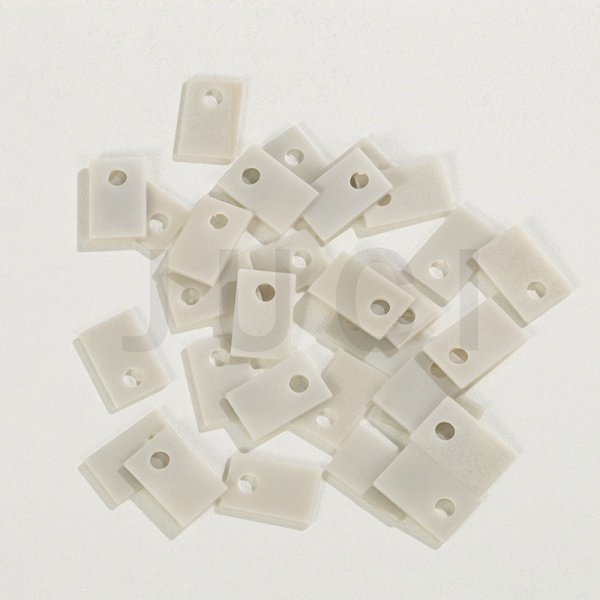
(1) Controlling the Quality of AlN Powder and Reducing Oxygen Impurity Content
Improving the synthesis method of AlN powder to produce high-purity powder with a particle size below 1 μm and an oxygen content of 1% is a prerequisite for preparing high-thermal-conductivity AlN ceramics. Additionally, for AlN powder containing sintering aids, introducing an appropriate amount of carbon can reduce and carburize the oxides on the AlN powder surface during the sintering process before densification, thereby enhancing the thermal conductivity of AlN ceramics. From this perspective, AlN powder prepared by the carbothermal reduction method may be more conducive to improving the thermal conductivity of AlN ceramics.
(2) Selecting Appropriate Types and Amounts of Sintering Additives
Extensive research has shown that rare-earth metal oxides and fluorides, alkaline-earth metal oxides and fluorides, etc., can serve as sintering aids to improve the thermal conductivity of AlN. Sintering aids react with alumina in AlN to form aluminate liquid phases, facilitating liquid-phase sintering and densification of the green body. On the other hand, sintering aids can reduce the oxygen content in the AlN lattice while enhancing contact between AlN particles, thereby improving thermal conductivity. However, the amount of additives must be appropriate—excessive amounts increase impurity content and impair thermal conductivity, while insufficient amounts fail to serve as effective sintering aids. As mentioned earlier, recent studies have shown that composite additives are more effective than single additives in enhancing thermal conductivity while also lowering the sintering temperature.
The effectiveness of additives in improving thermal conductivity has been confirmed by numerous experiments. Introducing suitable additives is currently a widely adopted method. However, there is no unified conclusion regarding the selection and combination of additives, their optimal amounts, or the methods of addition, necessitating further in-depth and systematic exploration.
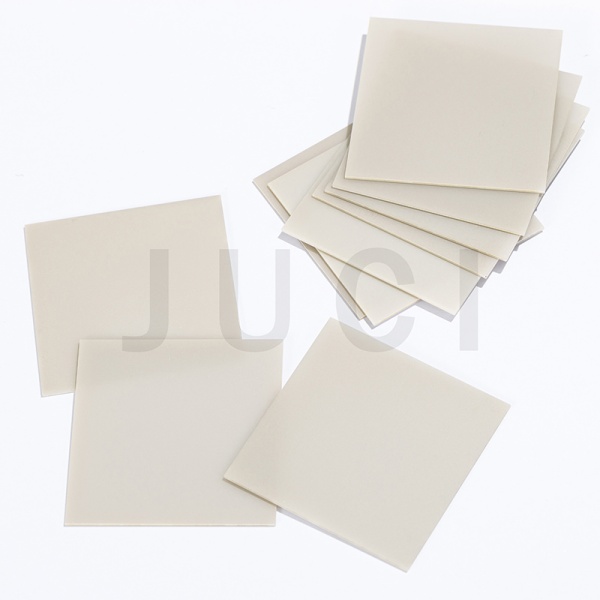
(3) Optimizing Sintering Processes
For AlN ceramics, slow heating during sintering is more advantageous than rapid heating, as it not only reduces deformation but also improves the densification of the green body, thereby enhancing the performance of AlN ceramics.
The sintering process also involves an optimal sintering temperature. If the temperature is too high, excessive grain growth occurs, the grain boundary phase increases, and densification decreases, negatively impacting thermal conductivity.
Appropriately extending the sintering time can further purify the crystal lattice, promote grain growth, and significantly reduce porosity, thereby increasing thermal conductivity.
Generally, sintering in a reducing atmosphere under nitrogen protection can reduce oxygen impurities in AlN through carbothermal nitridation and reduction, which is beneficial for improving thermal conductivity. Pressure sintering significantly enhances the sintering performance of AlN and reduces the amount of sintering aids required. Increasing pressure improves the densification of AlN, all of which contribute to better performance of AlN ceramics. Additionally, the powder-bed method also affects the thermal conductivity of AlN ceramics.
(4) Prolonging Sintering Time
In addition to introducing sintering aids and optimizing sintering processes, extending the sintering time can also improve the thermal conductivity of AlN ceramics. For example, annealing in a reducing atmosphere can remove oxygen and secondary phases from AlN. Nakano et al. used a similar method, heat-treating sintered AlN (with Y₂O₃) in a reducing nitrogen atmosphere at 1900°C. After 20 hours, the thermal conductivity reached 220 W/m·K, and after 100 hours, it increased to 272 W/m·K.
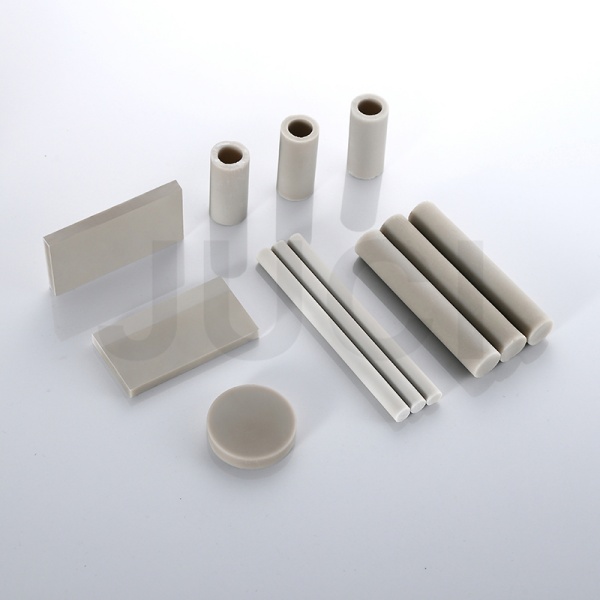
About Xiamen Juci Technology
Juci Technology, with its high-purity raw materials, composite additive technology, precise sintering process and flexible customization capabilities, has become one of the few domestic enterprises capable of stably mass-producing high thermal conductivity AlN ceramics, especially suitable for the demands of high-end fields such as high-power leds, IGBT modules and aerospace.
Media Contact:
Xiamen Juci Technology Co., Ltd.
Phone: +86 592 7080230
Email: miki_huang@chinajuci.com
Website: www.jucialnglobal.com
Aluminum Nitride (AlN) possesses a series of excellent properties, with its core advantages including outstanding thermal conductivity, reliable electrical insulation, and a thermal expansion coefficient that matches silicon. In which fields can it be applied?
1、Heat Dissipation Substrates and Electronic Device Packaging
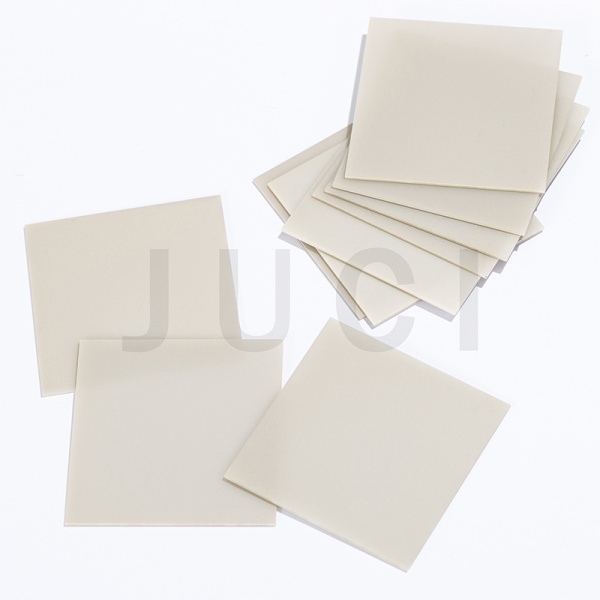
Heat dissipation substrates and electronic device packaging are the primary applications of AlN ceramics. AlN ceramics exhibit exceptional thermal conductivity, a thermal expansion coefficient close to that of silicon, high mechanical strength, good chemical stability, and are environmentally non-toxic. They are regarded as ideal materials for the next generation of heat dissipation substrates and electronic device packaging. They are particularly suitable for hybrid power switch packaging, microwave vacuum tube encapsulation shell materials, and are also an ideal substrate material for large-scale integrated circuits.
2、Structural Ceramics
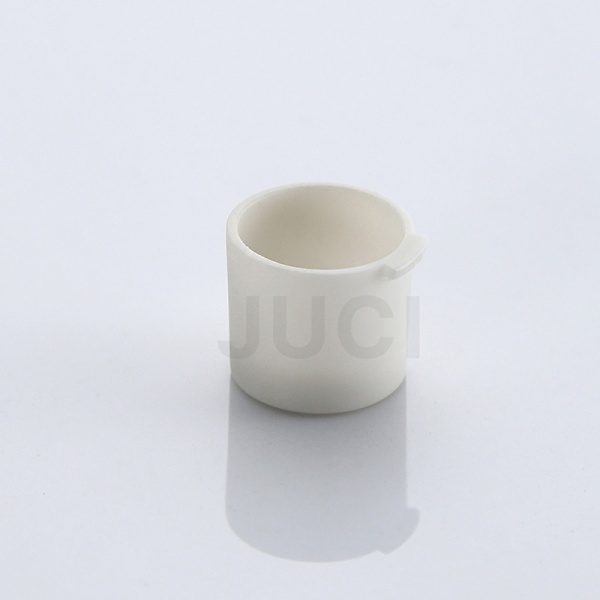
A common application of structural ceramics is in electrostatic chucks for wafer processing. AlN structural ceramics offer excellent mechanical properties, high hardness, and better toughness than Al₂O₃ ceramics, along with high-temperature and corrosion resistance. Leveraging AlN's heat and erosion resistance, it can be used to manufacture high-temperature corrosion-resistant components such as crucibles, Al evaporation dishes, and semiconductor electrostatic chucks.
3、Functional Materials
AlN can be used to produce high-frequency, high-power devices capable of operating in high-temperature or radiation-prone environments, such as high-power electronic devices and high-density solid-state memory. As one of the third-generation semiconductor materials, AlN boasts a wide bandgap, high thermal conductivity, high resistivity, excellent UV transmittance, and high breakdown field strength.
With a bandgap of 6.2 eV and strong polarization effects, AlN finds applications in mechanical, microelectronic, optical, and surface acoustic wave (SAW) device manufacturing, as well as high-frequency broadband communication. Examples include AlN piezoelectric ceramics and thin films. Additionally, high-purity AlN ceramics are transparent, offering excellent optical properties. Combined with their electrical properties, they can be used to create functional devices such as infrared radomes and sensors.
4、Inert Heat-Resistant Materials
As a heat-resistant material, AlN can be used for crucibles, protective tubes, casting molds, and more. AlN remains stable in non-oxidizing atmospheres up to 2000°C, making it an excellent high-temperature refractory material with strong resistance to molten metal erosion.
5、Heat Exchange Components
AlN ceramics feature high thermal conductivity, low thermal expansion coefficient, and excellent thermal efficiency and thermal shock resistance, making them ideal materials for heat exchange and thermal shock resistance. For example, AlN ceramics can serve as heat exchanger materials for marine gas turbines and heat-resistant components in internal combustion engines. The superior thermal conductivity of AlN materials significantly enhances the heat transfer efficiency of heat exchangers.
6、Filler Materials
AlN exhibits excellent electrical insulation, high thermal conductivity, good dielectric properties, and compatibility with polymer materials, making it an outstanding additive for electronic polymer materials. It can be used as a filler for thermal interface materials (TIM) and flexible copper-clad laminate (FCCL) dielectric layers, widely applied as a thermal transfer medium in electronic devices to improve efficiency. Examples include filling gaps between CPUs and heat sinks, or acting as a thermal transfer medium in the fine gaps between high-power transistors, thyristors, and substrates.
About Xiamen Juci Technology
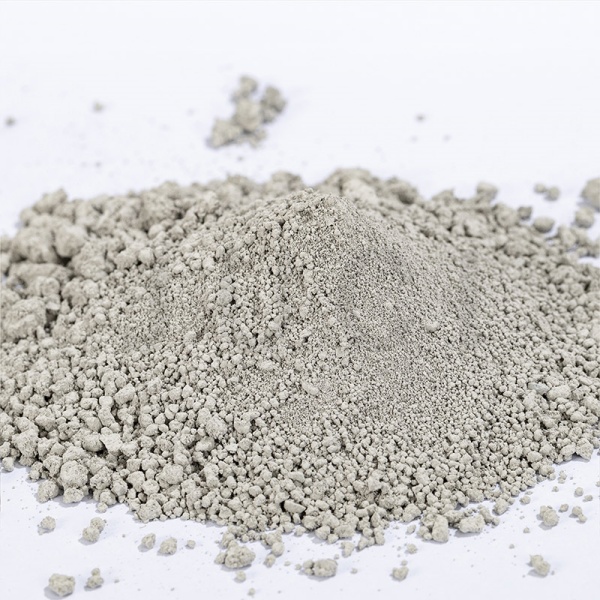
Xiamen Juci Technology is the leading AlN powder manufacture in China. Our AlN products feature excellent thermal conductivity, electrical insulation, and mechanical strength, widely used in electronic packaging, semiconductors, LED heat dissipation, and other fields. Juci Technology specializes in manufacturing high-performance aluminum nitride heat sinks and aluminum nitride ceramic substrates, providing leading solutions for electronic heat dissipation.
Media Contact:
Xiamen Juci Technology Co., Ltd.
Phone: +86 592 7080230
Email: miki_huang@chinajuci.com
Website: www.jucialnglobal.com
Phenylmethane bismaleimide BMI-200 Physical Properties Technical Indicators Solubility <10 50% transparent solution (ketone solvent) Solubility 
Appearance Softening point Acid value
Brownish-yellow lumps 60-120℃