Yellowing of the Polyvinyl butyral resin (PVB) at the edges of laminated glass is a rare but important quality issue. You usually see it as two yellow spots about 5 cm wide along the edges. Since this tends to happen often, many customers have complained, leading to some losses for the company. This study investigates the cause by checking the production steps, running tests, and using a microscope to pinpoint the issue and find a solution.
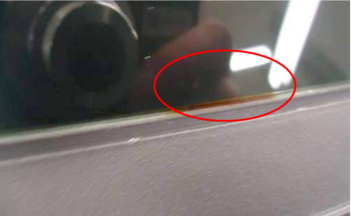
Cause Analysis
Making laminated glass involves several steps: cutting, edging, lamination, autoclave treatment, and finally packaging, storing, and transporting. We've noticed that the yellowing mainly occurs where the glass vials touch the rack base, specifically in a 5 cm area. This yellowing doesn't appear right after autoclaving; it tends to show up during packaging and storage. Here are a few initial ideas about what might be causing it:
-
Local PVB Aging Due to High Temperature: We tried using glass on a new rack that had a trimmed rubber base and deeper grooves, and there was no yellowing after a day. So, that's not the problem.
-
Plastic Film Aging Contaminating PVB: We tried switching the film with adhesive tape, but there was still yellowing, which means the film isn’t the main culprit.
-
Migration of Yellowing from Rubber Material: Seeing that putting glass on a clean rack stopped it from turning yellow makes it pretty clear that the old rubber parts are the cause of the discoloration.
Testing and Mechanism Study
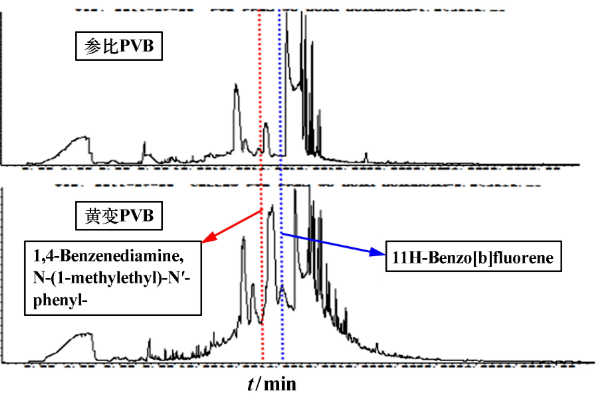
We used FTIR and GC-MS to check out the yellowed PVB(Resin B-05SY & PVB SD-2)and rubber materials. The findings included:
-
There weren't any major differences in the composition of PVB or rubber.
-
C-MS detected extra organic compounds in the yellowed PVB, which are rubber additives. These substances migrated to the PVB due to a blooming effect from the EPDM rubber, causing the yellow spots.
Optimization Solutions
Based on our findings, we suggest three solutions:
-
Prevent Blooming Migration: Add an inorganic barrier between the glass and rubber.
-
Maintain Rubber Base: Trim aged surfaces periodically.
Conclusion
Identifying the issue has been really beneficial. This approach could also help address yellowing problems in other materials, like Ethylene Vinyl Acetate (EVA), which might spark some useful ideas for related issues.
Website: www.elephchem.com
Whatsapp: (+)86 13851435272
E-mail: admin@elephchem.com
In advanced materials engineering, N‑phenylmaleimide (N‑PMI) manuafctured by Yangchen Tech

