Powder coating is a common finishing technique used in the automotive industry due to durability, aesthetic appeal, and resistance to corrosion. It is applied electrostatically as a dry powder and then cured using heat to form a hard, protective coating. Several automotive parts benefit from powder coating treatment, including:
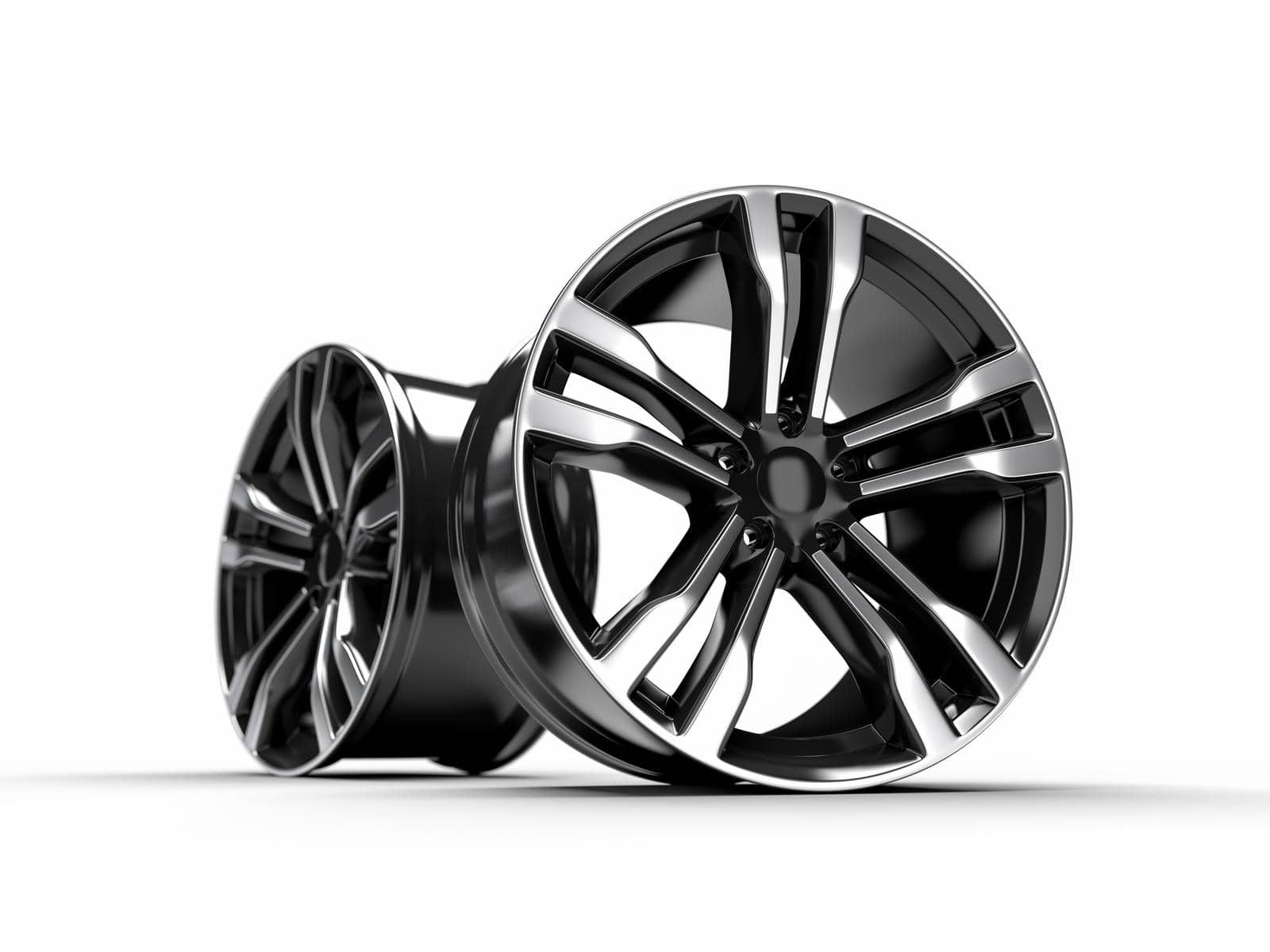 1. Wheels: Powder coating is often used to enhance the appearance of wheels and provide protection against chips, scratches, and corrosion.
2. Chassis and frames: Powder coating is applied to chassis and frame components to ensure long-lasting protection against rust, chemical exposure, and abrasion.
3. Suspension components: Parts such as control arms, coil springs, sway bars, and strut housings can be powder coated for added durability and resistance to wear.
4. Engine components: Many engine parts can benefit from powder coating, including valve covers, intake manifolds, engine blocks, and brackets. Powder coating helps protect these components from heat, chemicals, and corrosion.
5. Exhaust systems: Powder coating exhaust components not only enhances their appearance but also provides high-temperature resistance, preventing discoloration and corrosion caused by extreme heat.
6. Emblems and trim: Powder coating can be used to coat emblems, badges, grilles, and other trim pieces, providing a durable finish and a customized look.
7. Interior components: Certain interior parts like roll bars, dashboard trim, door handles, and shift knobs can be powder coated to match the overall aesthetic theme of the vehicle.
8. Bumpers and body panels: Powder coating can be used to protect and beautify bumpers, body panels, and other exterior components, guarding against corrosion and damage.
9. Suspension and steering linkages: Powder coating these components enhances their appearance while offering rust and corrosion resistance, improving their longevity and performance.
10. Brackets and mounts: Powder coating these smaller metal components provides them with a durable finish, protecting against rust and wear.
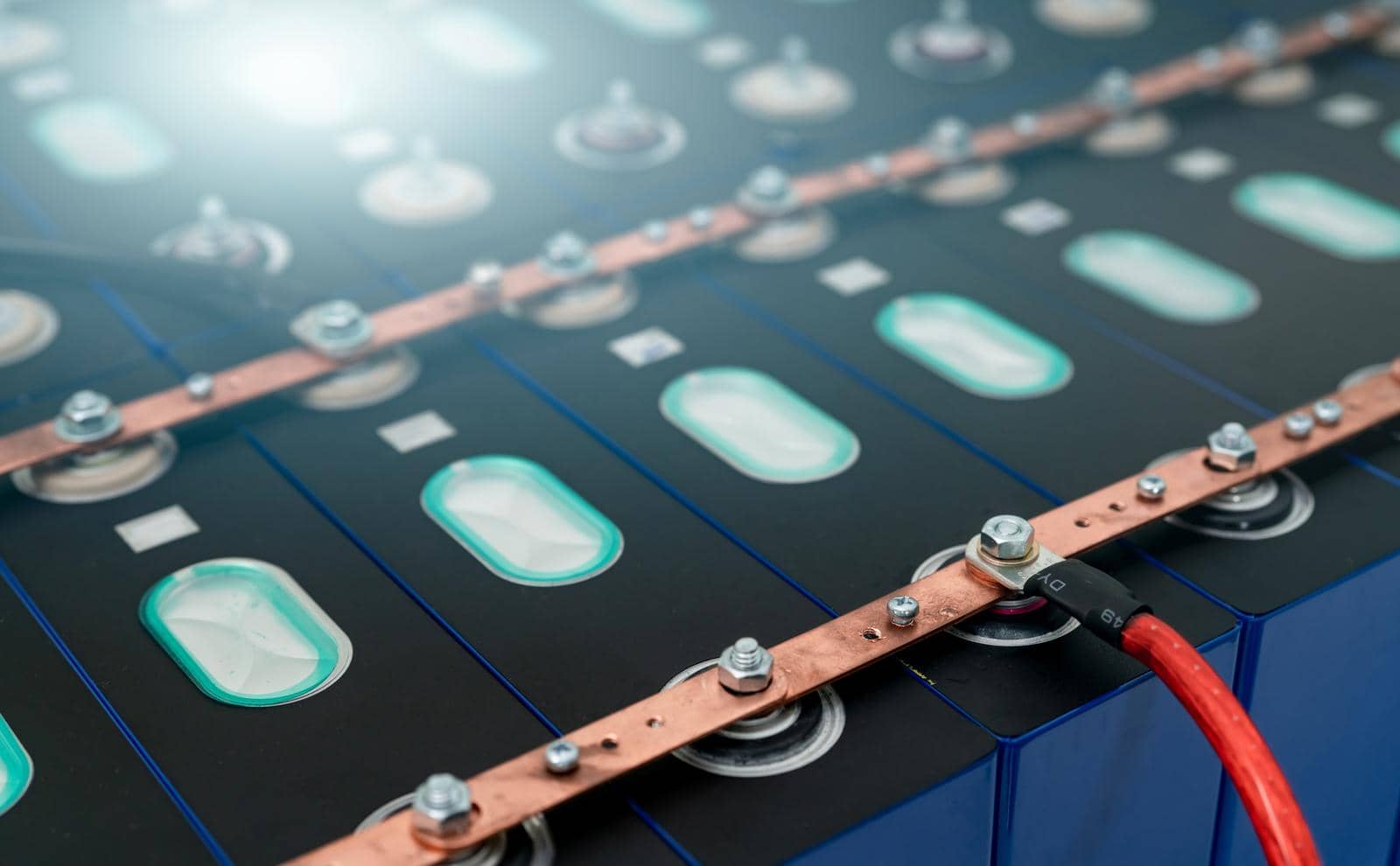
Powder Coating Services From Fujian Wanan Industry Group Co.,Ltd.is a high-tech enterprise which specializing in manufacturing thermosetting powder coating.
Founded in January of 1996 and after more than 27 years developing,we already became one of the top manufacturer which focusing on research,developing manufacturing and sales.
Our powder coatings had gained a great reputations from both home and abroad,we have approved by ISO 9001:2015,ISO 14001:2015,ISO 45001:2018,IATF 16949,CNAS and QUALITOAT.
Our brand stable quality,well coating ability,strong impact resistance,strong adhesion,perfect weather resistance property and large painting area. WANAN brand keep Top 3 in China since 1996.
Tetramethyl ammonium hydroxide is a commonly used etchant, particularly widely used in the manufacturing process of integrated circuits and microelectronic devices. The followings are some applications of Tetramethylammonium hydroxide in etchants:
- Etch silicon: Tetramethyl ammonium hydroxide can be used to etch silicon surfaces, especially suitable for preparing micron level silicon device structures. Tetramethyl ammonium hydroxide can selectively etch silicon, while for other materials such as silicon nitride or metals, it has a lower etching rate.
- Etch glass: Tetramethyl ammonium hydroxide can be used to etch the surface of glass and is typically used to prepare microfluidic chips or microchannel devices. TMAH can efficiently etch glass materials into desired structural shapes, such as micron level channels, pores, or reaction cavities.
- Etch Metal: Although Tetramethyl ammonium hydroxide has a relatively low etching rate on metals, it can be used to etch metals in certain applications. For example, it can be used to remove oxide layers from metal surfaces for subsequent metal deposition or bonding.
We supply Tetramethyl ammonium hydroxide 25% water&methanol solution with the appearance of colorless liquid. If you have any interests, welcome to visit us at www.ahsuperchem.com.
In 1924, D L. Friedell proposed an explanation for the antibacterial activity process of cationic surfactants, which involves the disintegration, modification, and release of nitrogen and phosphorus substances from the cellular structure of basic proteins. It is generally believed that cationic surfactants achieve bactericidal or antibacterial effects through the following steps: firstly, they directly act on proteins to change their nature and disrupt them; Secondly, it inhibits metabolism by interacting with enzymes; The third is the role of cell infiltration and membrane disruption; The fourth is to stimulate glycolytic reactions.
The inhibition of microbial activity by cationic surfactants is to prevent their growth, thereby limiting the concentration of microorganisms and avoiding further pollution. Therefore, it is necessary to study the minimum inhibitory concentration at which cationic surfactants can prevent microbial growth. The minimum inhibitory concentration (MIC) varies with different microorganisms or cationic surfactants, and also varies with changes in the usage environment.
Kawabata's research suggests that the antibacterial mechanism of quaternary ammonium cationic fungicides is that the fungicide adsorbs onto the surface of negatively charged bacteria, diffuses through the cell wall, binds with the bacterial plasma membrane to rupture, and the bacteria die due to the release of their contents. T. E. Cloete's research indicates that the action of antibacterial agents is to first adsorb onto the surface of bacterial cells, then cross the cell wall or membrane to reach its target site, such as the cell membrane, respiratory system, enzymes, and genetic material.
Ahsuperchem provides many kinds of quaternary ammonium compounds products, if you have any interests or want to know more about them, please feel free to visit www.ahsuperchem.com.
Tetramethyl ammonium chloride, TMAC, easily soluble in water and alcohols, belongs to Quaternary ammonium compounds. It has a lot of applications in many fields, the following mainly introduces one of the most important functions of Tetramethyl ammonium chloride in oilfield exploitation.
Tetramethylammonium chloride is widely used as a shale inhibitor in oilfield exploitation. The clay content in shale is high. When water-based drilling fluid comes into contact with shale, it can cause clay to expand and disperse, leading to wellbore collapse. Shale swelling and dispersion when encountering water are caused by the dissociation and hydration of exchangeable cations on the surface of shale in water, forming a diffusion double layer with negative charge and generating electrostatic repulsion. Therefore, drilling fluid should have two major functions-preventing or delaying water migration from the wellbore to the wellbore, and increasing the connectivity between mineral particles on the wellbore. Cationic surfactants can produce surface active cations after dissociation in water, which can adsorb on the clay surface, neutralize the negative charge on the clay surface, and inhibit shale expansion and dispersion, thereby stabilizing the wellbore.
Ahsuperchem is the stable supplier of Tetramethylammonium chloride, we supply TMAC with the purity of 50% liquid and 99% powder, if you have any interests in this material, please contact us freely.
The molecular structure formula of polyacrylamide can be represented as:
This formula represents the repeating unit in the polymer chain of polyacrylamide. Each unit consists of an acrylamide monomer (CH₂=CHCONH₂) in which the amide group (-CONH-) connects the monomers together to form the polymer chain. The subscript 'n' indicates the number of repeating units in the polymer chain, which can vary depending on the molecular weight and polymerization process.
Polyacrylamide is a synthetic polymer composed of repeating units of acrylamide monomers. The molecular structure of polyacrylamide can be represented as:
[-CH₂─CH(CONH₂)-]n
In this structure, the brackets encompass the repeating unit, and "n" represents the number of repeating units in the polymer chain. Each repeating unit consists of three main parts:
1. A backbone chain: The backbone chain is formed by a series of carbon atoms linked together. In polyacrylamide, the backbone is composed of a long chain of carbon atoms represented by "-CH₂─" (where "-CH₂-" indicates a methylene group) and has a linear structure.
2. Functional groups: The functional groups to the backbone are what give polyacrylamide its desired properties. In the case of polyacrylamide, the functional group is the acrylamide group, represented by "-CH(CONH₂)-". The acrylamide group contains a carbonyl group (C=O) and an amide group (-NH₂) attached to the backbone carbon chain.
3. Terminating groups: The polymer chain is terminated by additional chemical groups to maintain stability and prevent further polymerization. However, these groups may vary depending on the specific synthetic method or desired properties of the polyacrylamide.
It's worth noting that polyacrylamide can exist in different forms, such as linear or cross-linked structures, depending on the polymerization process and the presence of cross-linking agents. The molecular structure described above represents the basic repeating unit in the linear form of polyacrylamide.
Polyacrylamide market is expected to grow from its estimated USD 5.39 billion in 2022 to USD 10.23 billion by the end of 2030, according to a report released by Zion Market Research. Over the course of the projection period, the market is anticipated to expand at a CAGR of 8.34%.
👉 Global Polyacrylamide Market: Overview
Polyacrylamide is a polymer that is created by the synthesis of acrylamide subunits and is widely utilized in the water treatment and papermaking industries. The need for wastewater management and growing environmental concerns have raised polyacrylamide demand. In water management, flocculants and coagulants—organic polymers—help separate suspended solid or liquid particles. Here, coagulant polyacrylamide is used to improve the coagulation-flocculation process. In the pad drilling method that is typically used to produce shale gas, polyacrylamide reduces friction.
👉 Global Polyacrylamide Market: Growth Factors
The mining industry uses polyacrylamide extensively to separate minerals and ores in the mines, which is anticipated to fuel the expansion of the polyacrylamide market. The bio-based acrylamide is being commercialized by few polyacrylamide manufacturers, which presents a huge growth opportunity for the global market. Anionic polyacrylamide is used by certain farmers and builders as a means of halting soil erosion by retaining suspended sediments. In order to increase the market for polyacrylamide, anionic polyacrylamide is also utilized in the processes of sugar juice clarification, water recycling, fermentation byproduct recovery, and water clarifying. But excessive polyacrylamide use is bad for human health, which is why the government and numerous environmental organizations have put limits on polyacrylamide use.
👉 Major market players influencing the global polyacrylamide market are:
Anhui Jucheng Fine Chemicals Co., LTD.
SNF
BASF.
Solenis
Polyacrylamide Market Size, Share, Growth Report
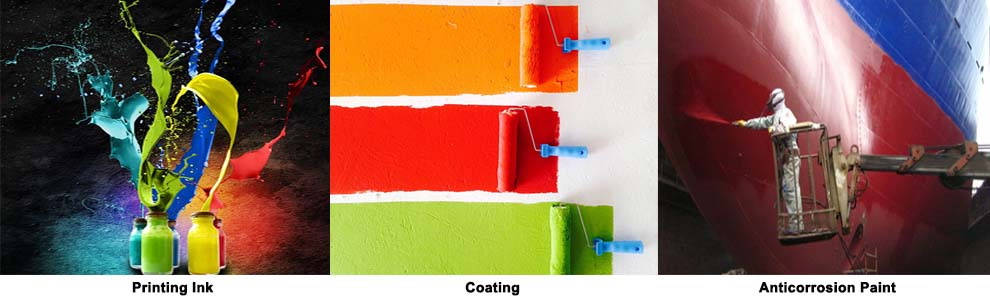
CMP15 is applied for thick-form paint, as it remains well under the condition of acid & alkali. It can be applied to alkali based material, such as asbestos, concrete and brick, so it could be mixed in paint for swimming pools, construction, bridges and road marking.
CMP25 is applied for heavy anti-corrosive paint extensively. The structure of the product makes it bonding easily. It can be applied in the paint which is used under the dry-air condition and physical dry condition, such as steel structure, container paint, marine and industrial anti-corrosive paint.
CMP35 is thicker than CMP25 and the usage is same as CMP25. Especially for the anticorrosive paint used under ocean climate. It also can be used for anti-corrosive paint for light metals, such as aluminum and zinc.
CMP45 is especially good for making solvent type of gravure ink and plastic composite ink (OPP & PE).
CMP60 is used for special ink or metal adhesive.
So far, sinosunman's CMP15&25&35&45&60 resin can perfectly replace Laroflex MP 15&15&35&45&60.
Why Two-Component Marking Paints Are More Suitable for Heavy Traffic Sections?
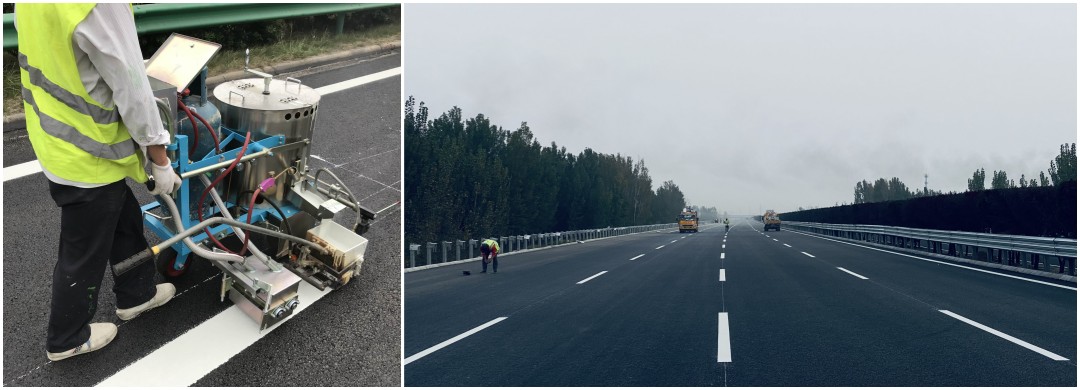
There are roughly three types of road marking paint on the market, namely: waterborne marking paint, hot melt marking paint, and two-component marking paint. So, what are the differences between these types of markings, and which type is more suitable for heavy traffic sections?
1. The waterborne marking paint has poor wear resistance and can only be used for about three months to half a year. Moreover, because the paint itself does not adhere firmly to the glass beads, the marking does not have reflective performance; despite the construction and maintenance efficiency of the marking project higher, but it’s not that appreciate to be used in heavy traffic sections. Usually,waterborne markings are more suitable for first- and second-level highways in cities and sections with less traffic.
2. The wear resistance of hot melt marking paint is better than the waterborne markings. It can be used for more than one year in heavy traffic areas. Usually,hot melt paints are mixed with drop-on glass beads to make road markings reflect light. However, since the main raw material of hot-melt marking paint is C5 petroleum resin, which is greatly affected by temperature changes, markings will become sticky under high temperatures in summer and easily adhere to dirt, especially in cities with serious environmental pollution, the markings will not be stain resistant.
3. The two-component marking paint has the strongest wear resistance among the three and can be used for more than 2 years even on roads with heavy traffic. The main raw material of the two-component marking paint is methyl methacrylate, which prevents the two-component marking from being affected by temperature changes and wear-resistant and crack-resistant fibers after the marking is damaged. It also has a good effect on glass beads. The excellent adhesiveness prevents the glass beads on the marking surface from falling off easily. When carrying out marking maintenance, there is no need to remove the old markings. You only need to polish the surface of the old markings and then spray paint a layer of two-component high-brightness markings, thus further improving the efficiency of marking maintenance.
It's important to note that different manufacturers may have proprietary formulations or variations in resin types for road marking paints. Additionally, regional regulations and standards may influence the choice of resin for road marking applications.
The ultimate purpose of installing and maintaining road markings is to improve road safety; for this, high-quality raw traffic safety materials are essential.
As a leading manufacturer of traffic safety materials with more than 30 years’ experience, Tory is committed to ongoing product development and excellent customer services that makes us the perfect partner for your road marking paint supply needs. We can provide you with raw materials (such as reflective glass beads, MMA resin, AW element etc.) with very competitive prices which can be customized to meet the specific requirements of customers and projects. For more information, or to get started on your traffic safety solution: https://www.cntory.com/
Feel free to contact us:
Email: Echo@cntory.com
WhatsAPP: +8617355287086
LinkedIn:https://www.linkedin.com/company/anhui-tory-material-technology-inc/
How to Solve Bubbles in Road Markings?
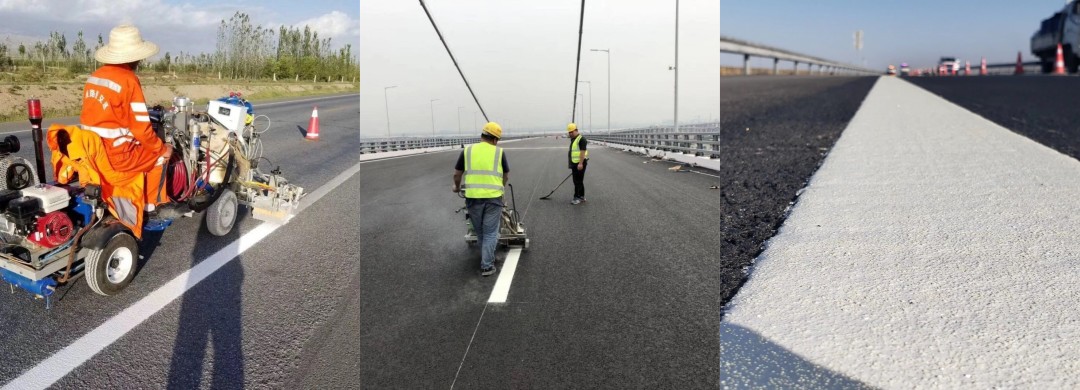
All roads should be clean and dry during the marking construction. Moisture is the most harmful factor in the adhesion of paint and pavement. The amount of moisture in the ground is enough to affect proper coating adhesion. Early morning dew and fog usually result in wet roads. If there is too much moisture on the road surface, it usually leads to blistering of the hot melt markings. Blisters will form as surface bubbles and may not burst. If this happens, the marking construction should be stopped until the road surface is dry. The only way to determine the presence of moisture is to perform a test. There are many ways to test for moisture:
1. Place a 30cm square thin plexiglass plate (aluminum foil, etc.) on the road with tape, and seal the surrounding edges with tape. After 15 minutes, check the bottom of the board and the road surface. If the moisture is too much, do not hot melt marking construction.
2. Place a 45cm square tar paper on the road surface and coat it with hot melt paint heated to 215 degrees Celsius. Wait two minutes and pick up the tar paper. Check the underside. If there is moisture, do not hot melt construction.
The ultimate purpose of installing and maintaining road markings is to improve road safety; for this, high-quality raw traffic safety materials are essential.
As a leading manufacturer of traffic safety materials with more than 30 years’ experience, Tory is committed to ongoing product development and excellent customer services that makes us the perfect partner for your road marking paint supply needs. We can provide you with raw materials (such as reflective glass beads, MMA resin, AW element etc.) with very competitive prices which can be customized to meet the specific requirements of customers and projects. For more information, or to get started on your traffic safety solution: https://www.cntory.com/
Feel free to contact us:
Email: Echo@cntory.com
WhatsAPP: +8617355287086
Detailed Process of Hot Melt Marking Construction

1. Road Cleaning
Before construction, the nearby area must be cleaned to ensure that there are no impurities such as oil, water, fallen leaves, weeds, etc., so as not to affect the adhesion, smoothness, and reflective effect of the markings.
2. Full Scale Plotting
During the setting out process, calculations and measurements must be made strictly in accordance with the construction drawings. Measure the number of lanes that need to be marked on the road, fix the points, and then mark them with a slate pen. Use titanium dioxide or double flying powder to stick a hemp rope to stretch the line. After the rope is removed, make corrections and improve it to ensure that the line shape is clear and accurate.
3. Lower Coating Agent Application
The primer is a common adhesive used in hot-melt marking construction. Applying it on the highway pavement can make the hot-melt paint better adhere to the road surface.
4. Hot melt coating application construction
Before construction, first check the relevant coating equipment.
As the trolley moves forward, the paint will form a film on the road surface, and a layer of glass beads will be spread on the film during the coating process. When the trolley moves forward, use the reference waterline as the ruler to control the thickness and width of the markings to ensure the coordination, clarity, and smoothness of the markings at the connection between straight lines and curves.
Note: During the coating process, in order to avoid settling and separation of the paint, the paint needs to be stirred frequently.
5. Line modification and opening to traffic
After the paint application is completed, check and correct the marked line shape, check the spread of glass beads, etc. After confirmation, clean up the construction site.
After the markings are dry and hardened, the relevant construction equipment can be moved, safety facilities removed, and traffic opened.
The ultimate purpose of installing and maintaining road markings is to improve road safety; for this, high-quality raw traffic safety materials are essential.
As a leading manufacturer of traffic safety materials with more than 30 years’ experience, Tory is committed to ongoing product development and excellent customer services that makes us the perfect partner for your road marking paint supply needs. We can provide you with raw materials (such as reflective glass beads, MMA resin, AW element etc.) with very competitive prices which can be customized to meet the specific requirements of customers and projects. For more information, or to get started on your traffic safety solution: https://www.cntory.com/
Feel free to contact us:
Email: Echo@cntory.com
WhatsAPP: +8617355287086
LinkedIn:https://www.linkedin.com/company/anhui-tory-material-technology-inc/
- Bismaleimide Series2
- Cross-Linking agent / Vulcanizing Agent1
- Curing Agent1
- Engineering Plastic Pellets4
- Epoxy Resin2
- Ethylene-VinylAlcohol Copolymer(EVOH)1
- Fish Oil1
- Food Additives3
- Glucosamine1
- Heat-resistant modifier series1
- High Assay Quaternary Ammonium Compounds9
- Low Assay Quaternary Ammonium Compounds13
- Modified Polyvinyl Alcohol1
- Monomalemide Series2
- Other Surfactants/Catalysts8
- Plastic Random Packing1
- Plastic Structured Packing1
- Polyacrylamide1
- Polyurethane Resin2
- Polyvinyl Alcohol (PVA)2
- Power Coatings3
- Quaternary Ammonium Hydroxide4
- Special Quaternary Ammonium Compounds7
- TPU4
- Tertiary Amines1
- UV Ink1
- VAE Emulsion (Vinyl Acetate–ethylene Copolymer Emulsion)1
- aluminum paste1
- antiform2
- fire sleeve2
- resin2